Understand your Swedish ancestry
If you are tracing your Swedish ancestry, you will soon meet old church records, Swedish words and place names that are hard to read. Swedish Kin explains them in plain English, one record and one word at a time.
Start here
- You found a Swedish word in your treeLook it up in the glossary: what the word meant for the person's life, how it appears in the records, and the sources.
- You have a household examination recordLearn to read the page column by column, and follow the family back one book at a time.
- You want to see all the guidesEvery guide explains one Swedish record or topic, with a source for every fact.
How Swedish Kin works
- Almost everyone was written downFor three hundred years the parish priest recorded births, marriages, moves and deaths.
- One word at a timeEach Swedish word is explained, with what it meant for the person's life.
- A source for every factEvery fact has a numbered source you can check. Where the sources say nothing, neither do we.
Guides
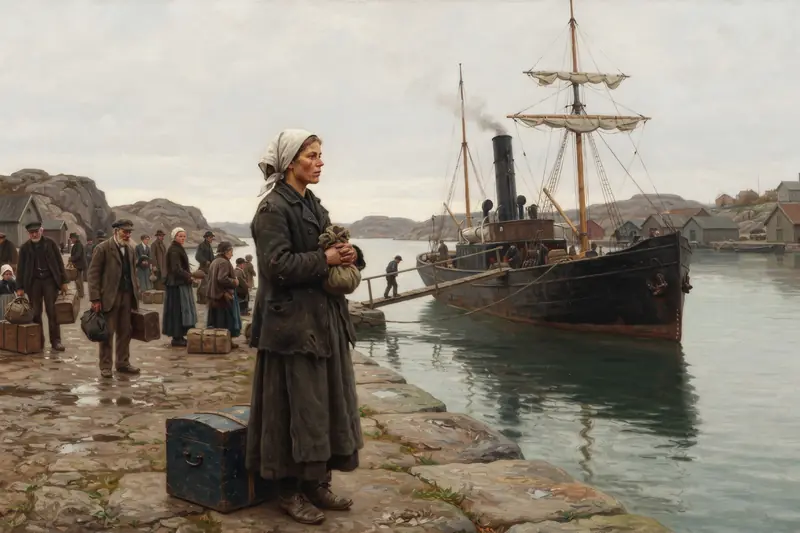 How to Find Your Swedish Ancestors' ParishFind Swedish ancestors' parish of birth: what American and Swedish records tell you, how to use emigrant lists and how to open the parish records.Read →
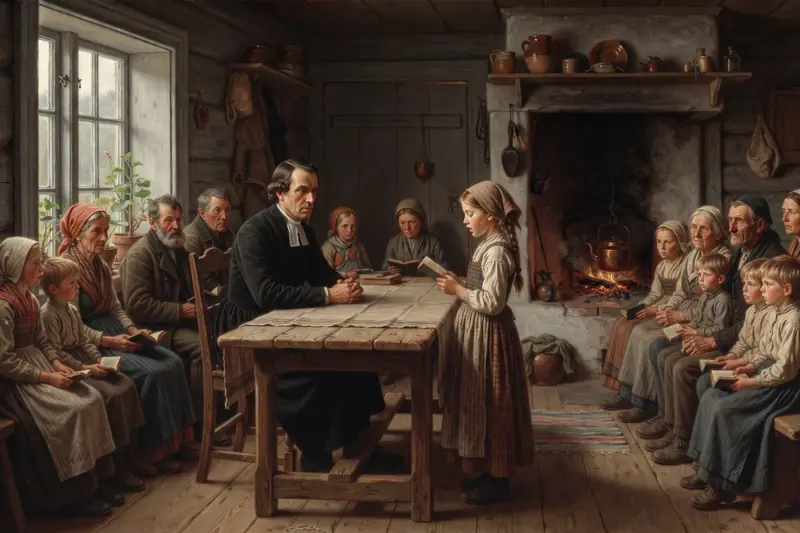 How to Read Swedish Household Examination RecordsSwedish household examination records list every household in the parish. Learn what the columns, marks and abbreviations mean and how to trace a family.Read →
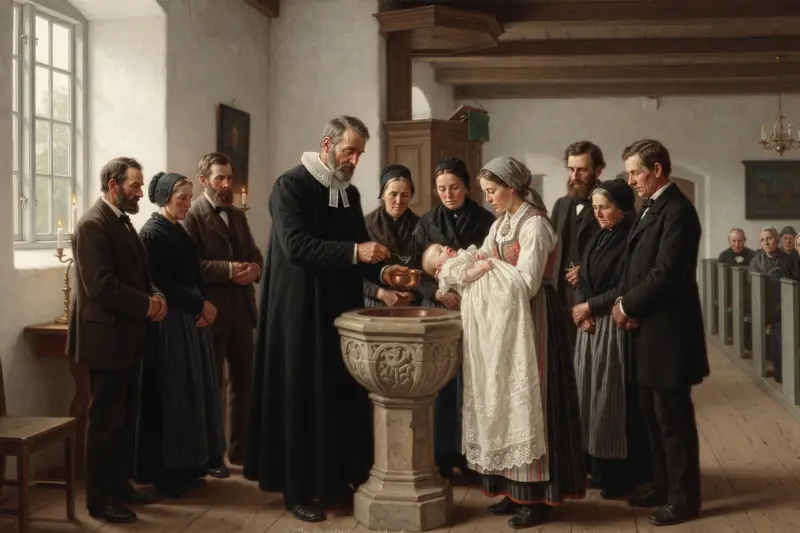 Swedish Patronymic Names: Why Your Ancestor's Surname ChangedSwedish patronymic names changed every generation. Learn how -son and -dotter worked, when they became surnames and how to find the right ancestor.Read →
Swedish words explained
- torpareA crofter – a man who farmed a small holding on someone else's land and paid for it with days of work.
- backstugusittareA poor cottager who lived in a small cabin on someone else's land, with no land to farm.
- inhysesA lodger – someone who lived and ate on a farm, usually not family and not a servant there.
- statareA married farm laborer on a large estate, hired for a year and paid mostly in goods, called stat.
- drängA farmhand – a male servant on a farm, usually unmarried and hired for one year at a time.
- pigaA maid – a female servant on a farm, usually hired for one year at a time.
- hemmansägareA farm owner – a farmer who owned his farm, called a hemman, and paid tax on it to the Crown.
- bondeA farmer – a man who worked his own or rented farmland in the countryside.
- sockenA parish – the area served by one church, and the unit the Swedish church records were kept by.
- husförhörslängdThe household examination record – the priest's book of everyone in the parish, household by household, which priests had to keep from 1686.