What does backstugusittare mean?
Backstugusittare has no single English word, so this page explains what it means and keeps the Swedish word. A poor cottager who lived in a small cabin on someone else's land, with no land to farm.
- Swedish
- backstugusittare
- Also seen as
- backstugesittare, backstuga
- Group
- Occupations and social standing
Definition
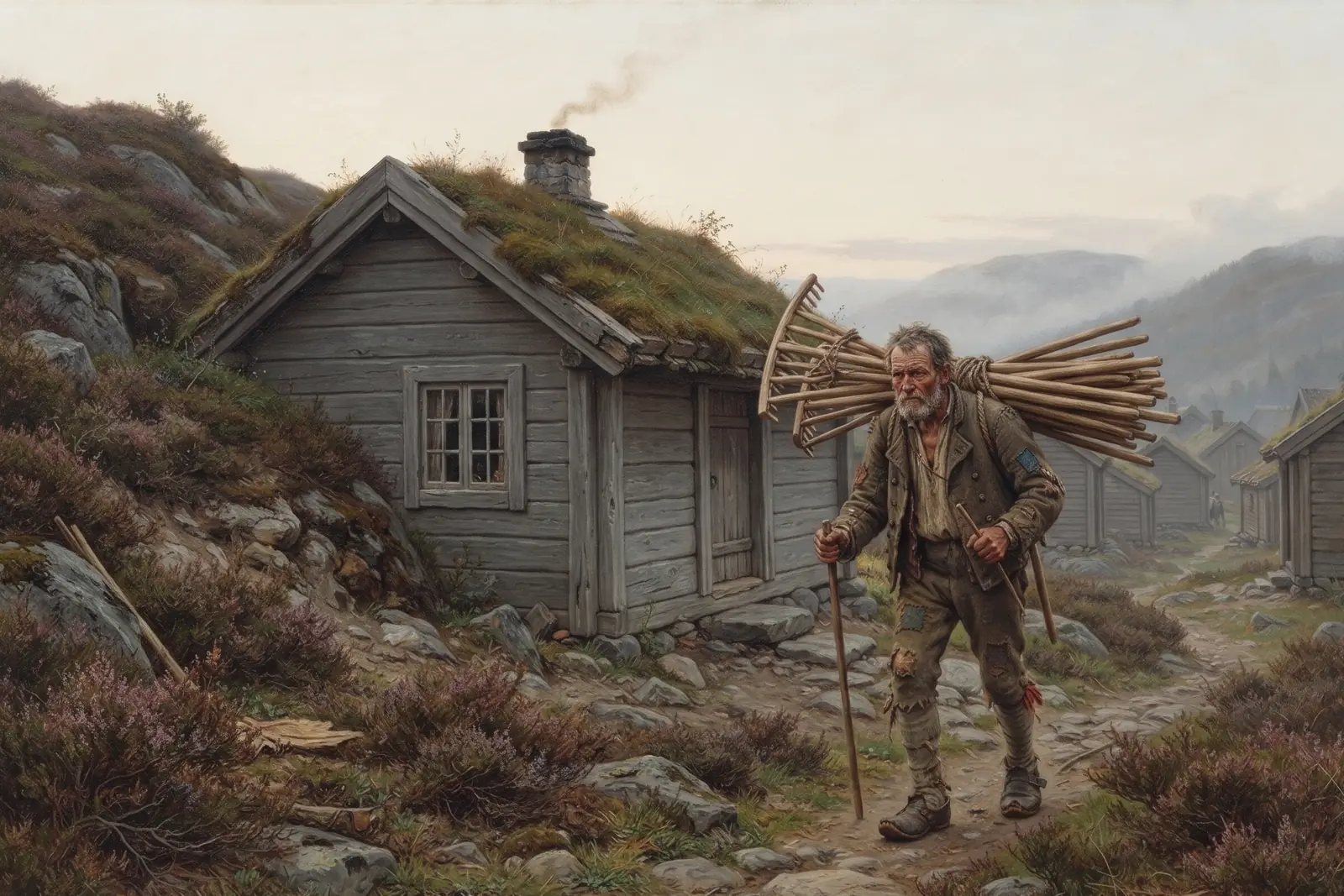
A backstugusittare lived in a small house or shed, a backstuga, on a landowner's land1. They usually owned the cabin but paid for the plot it stood on2. They had no land to farm and did no days of work for the landowner3. English has no exact word for them; Högman simply calls them "backstuge people"1.
In the records
The word stands before the name in the household examination record, in the place of the occupation4. You may also find it spelled backstugesittare, the form Högman uses1.
What it meant
Backstugusittare had no steady work, and they were often underemployed and underfed1. Many cabins had only three proper walls; Högman calls them dugouts1. The group grew a great deal between 1750 and 18501,3. Together with crofters, statare, lodgers and servants, they belonged to the landless, who in Swedish are called de obesuttna3.
Do not confuse with
A torpare (crofter) farmed a piece of land and paid for it with days of work. A backstugusittare farmed no land and did no days of work2,3. An inhyses (lodger) lived in someone else's house on a farm, and had a lower standing than a backstugusittare1.
Related
- torpare – A crofter – a man who farmed a small holding on someone else's land and paid for it with days of work.
- inhyses – A lodger – someone who lived and ate on a farm, usually not family and not a servant there.
- statare – A married farm laborer on a large estate, hired for a year and paid mostly in goods, called stat.
- Guide: How to Read Swedish Household Examination Records
Sources
Sources in English
- Hans Högman, The Old Agricultural Society – hhogman.se
Sources in Swedish
These pages are in Swedish.
- Landsarkivet i Uppsala (Riksarkivet), Hur hittar jag mitt torp i arkiven?, Gunilla Lundberg Ehnström, 2008 (in Swedish) – webbutik.riksarkivet.se
- Länsstyrelsen Skåne, De obesuttna (in Swedish) – lansstyrelsen.se
- Umeå University (CEDAR), Kyrkböcker. 1800-talets kyrkoregister, Ulla Nilsdotter Jeub, 2019 (in Swedish) – umu.se
Facts checked against sources, November 2026.