What does hemmansägare mean?
In Swedish records, hemmansägare means farm owner: a farmer who owned his farm, called a hemman, and paid tax on it to the Crown.
- Swedish
- hemmansägare
- In English
- farm owner
- Also seen as
- hemman, hemmansägaren, skattebonde
- Group
- Occupations and social standing
Definition
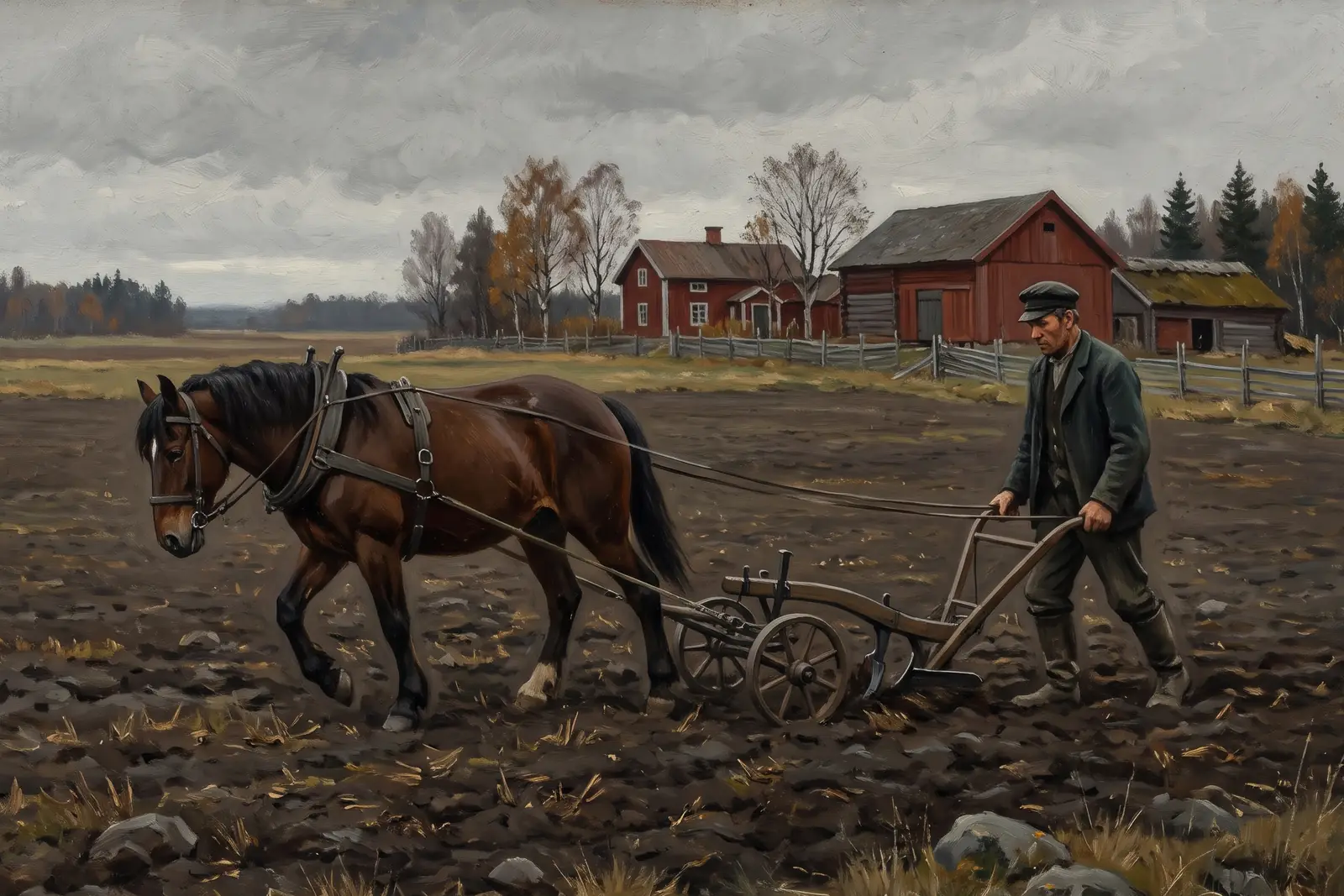
A hemmansägare (farm owner) was a farmer who owned his farm, his hemman4. It is another word for skattebonde, the tax-paying farmer who owned his land4. Högman translates the word as "farmer, freeholder, owner of a homestead"1. The skattebönder were freeholders who paid their tax to the Crown2.
In the records
The head of the household stands first on the page, with the family below and the servants last5. When the farm passed to the next generation, the father's title was crossed out or got an "f." before it, as in "f. Bond." (former farmer), and the son was written as the farmer5.
What it meant
The farm owner stood above the landless groups – crofters, statare, backstugusittare, lodgers and servants6. A farmer who was young and had small children often hired farmhands and maids3. When the farm passed to the next generation, the old couple could stay on the farm on undantag, a retirement arrangement with free lodging, usually in a smaller cottage on the farm3.
Do not confuse with
Not every bonde (farmer) owned his land. Farmers on Crown land (kronobönder) and on the nobility's land (frälsebönder) were tenants2. This glossary uses "farm owner" for hemmansägare.
Related
- bonde – A farmer – a man who worked his own or rented farmland in the countryside.
- torpare – A crofter – a man who farmed a small holding on someone else's land and paid for it with days of work.
- Guide: How to Read Swedish Household Examination Records
Sources
Sources in English
- Hans Högman, Genealogy terms A–R – hhogman.se
- Hans Högman, Land ownership in earlier times – hhogman.se
- Hans Högman, The Old Agricultural Society – hhogman.se
Sources in Swedish
These pages are in Swedish.
- Landsarkivet i Uppsala (Riksarkivet), Hur hittar jag mitt torp i arkiven?, Gunilla Lundberg Ehnström, 2008 (in Swedish) – webbutik.riksarkivet.se
- Umeå University (CEDAR), Kyrkböcker. 1800-talets kyrkoregister, Ulla Nilsdotter Jeub, 2019 (in Swedish) – umu.se
- Länsstyrelsen Skåne, De obesuttna (in Swedish) – lansstyrelsen.se
Facts checked against sources, November 2026.