What does inhyses mean?
In Swedish records, inhyses means lodger: someone who lived and ate on a farm, usually not family and not a servant there.
- Swedish
- inhyses
- In English
- lodger
- Also seen as
- inhysehjon
- Group
- Occupations and social standing
Definition
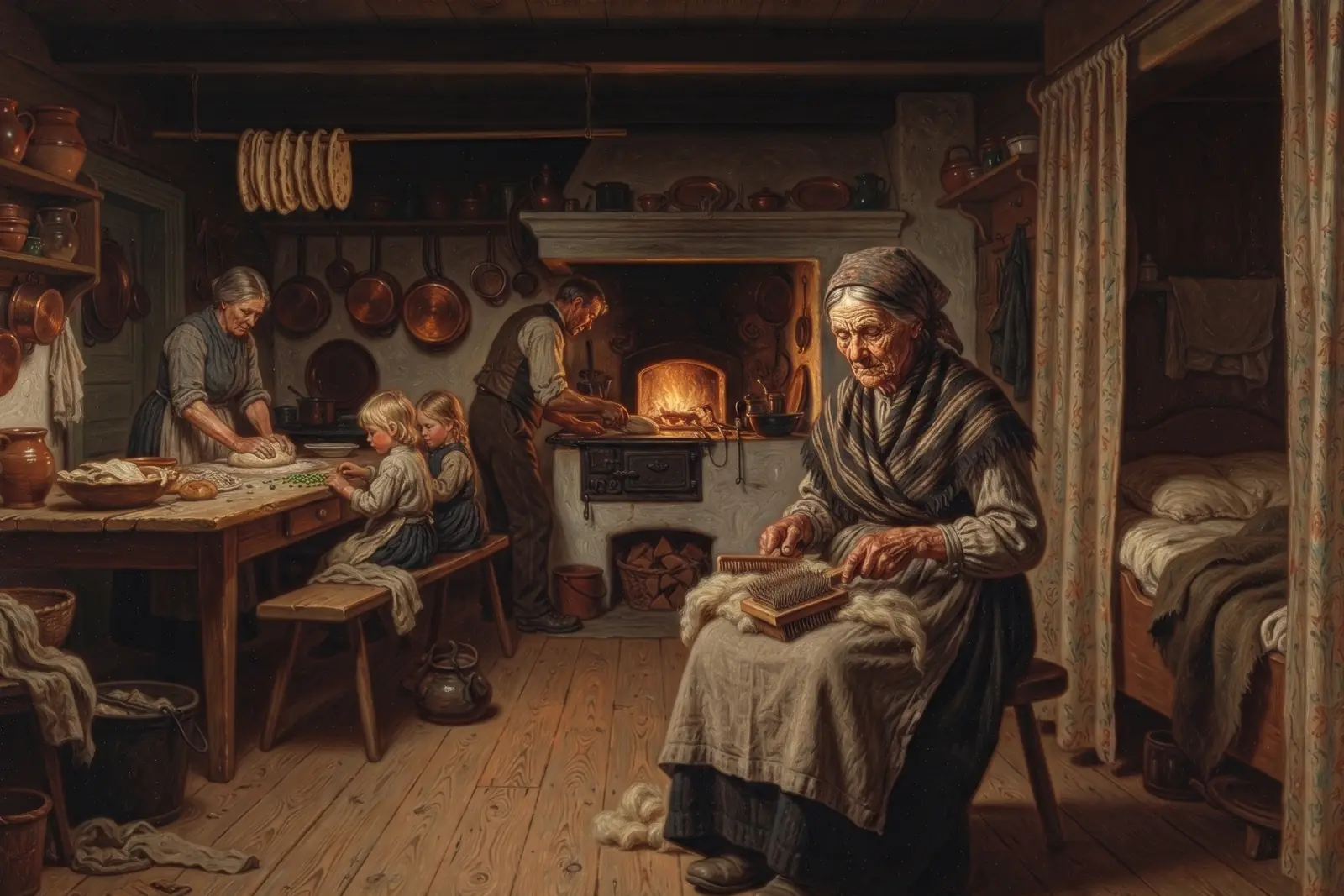
Inhyses (lodger) means that a person lived in someone else's house. The noun is inhysehjon. An inhysehjon was a lodger at a farm and was usually not closely related to the family there1. They had a place to live and food on the farm in return for helping with the work2.
In the records
The word stands before the name in the household examination record, where the occupation goes3.
What it meant
Inhysehjon belonged to the farm workers who owned no land, and ranked lower than the backstugusittare1. Högman writes that about 20 percent of the agricultural population was inhysehjon in 18551. The word was also used for the poor, the sick and the frail elderly who needed help1. Maids and farmhands who grew old on a farm could stay on there as inhysehjon1.
Do not confuse with
A backstugusittare had a cabin of their own on someone else's land1. A dräng or piga was a hired servant with a yearly contract1. An inhysehjon was not one of the farm's employees1.
Related
- backstugusittare – A poor cottager who lived in a small cabin on someone else's land, with no land to farm.
- dräng – A farmhand – a male servant on a farm, usually unmarried and hired for one year at a time.
- piga – A maid – a female servant on a farm, usually hired for one year at a time.
- Guide: How to Read Swedish Household Examination Records
Sources
Sources in English
- Hans Högman, The Old Agricultural Society – hhogman.se
Sources in Swedish
These pages are in Swedish.
- Länsstyrelsen Skåne, De obesuttna (in Swedish) – lansstyrelsen.se
- Umeå University (CEDAR), Kyrkböcker. 1800-talets kyrkoregister, Ulla Nilsdotter Jeub, 2019 (in Swedish) – umu.se
Facts checked against sources, November 2026.