What does piga mean?
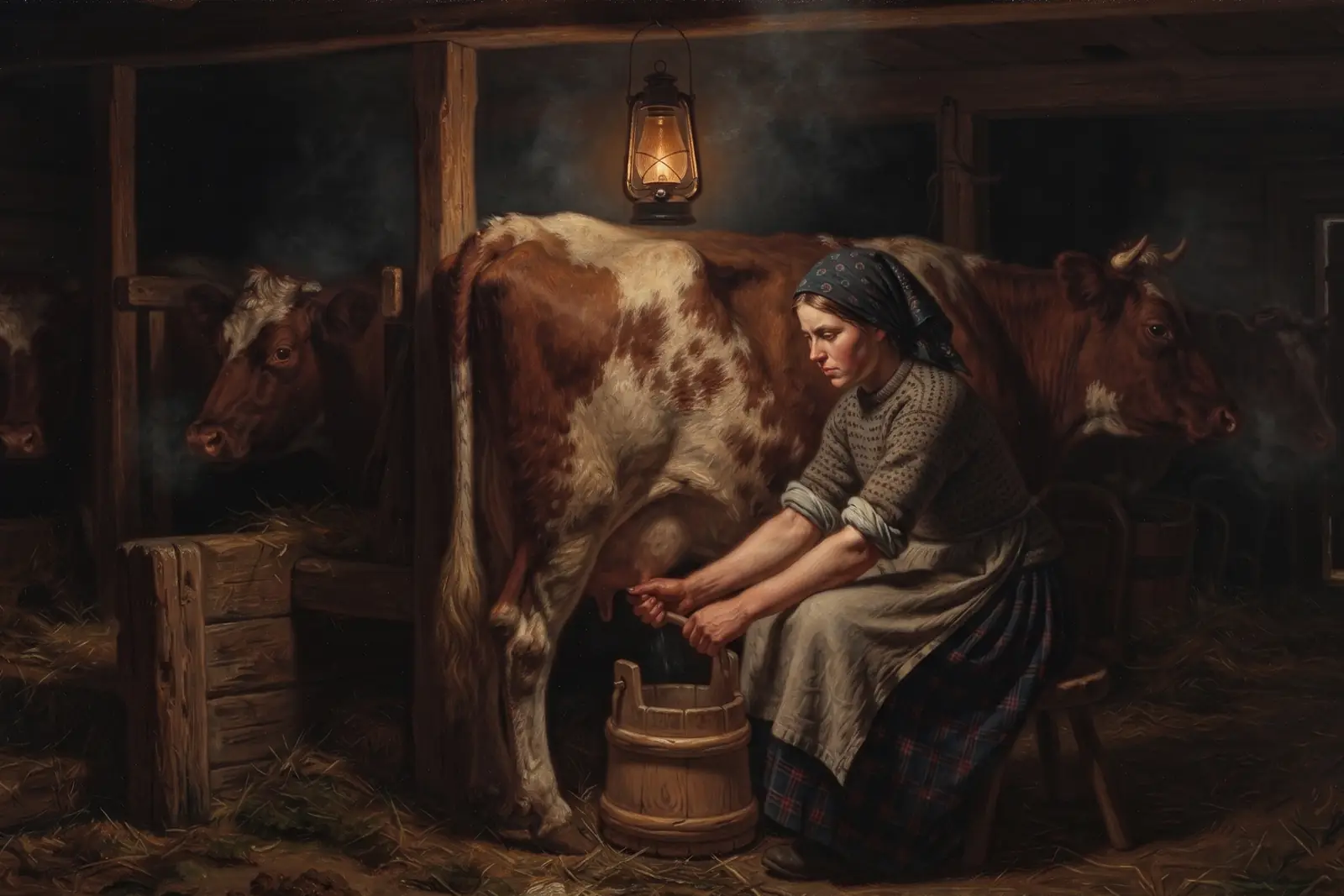
In Swedish records, piga means maid: a female servant on a farm, usually hired for one year at a time.
- Swedish
- piga
- In English
- maid
- Also seen as
- pigan, pigor, lillpiga, tjänstepiga
- Group
- Occupations and social standing
Definition
A piga (maid) was a servant girl or maid who worked on a farm1. Maids were usually hired for a year at a time to do many different tasks1. A lillpiga was a young girl who took service on a farm to support herself1.
In the records
The maid is written with the household she served, at the bottom of the page under the farmer's family2. The title stands before the name2.
What it meant
Maids and farmhands were bound by the same servant laws, the legostadgor, from 1664 to 19261,4. Under the law of 1734 the service year began at Michaelmas, 29 September, and from 1819 on 24 October5. A maid who changed employer had to report within seven days, and was entitled to a free week1. The word once also meant an unmarried daughter working on her parents' farm1.
Do not confuse with
A dräng is the male farmhand, hired on the same yearly terms1. An inhyses (lodger) was not hired on a yearly contract; they had a home and food on the farm in return for help with the work3.
Related
- dräng – A farmhand – a male servant on a farm, usually unmarried and hired for one year at a time.
- inhyses – A lodger – someone who lived and ate on a farm, usually not family and not a servant there.
- statare – A married farm laborer on a large estate, hired for a year and paid mostly in goods, called stat.
- Guide: How to Read Swedish Household Examination Records
Sources
Sources in English
- Hans Högman, The Old Agricultural Society – hhogman.se
Sources in Swedish
These pages are in Swedish.
- Umeå University (CEDAR), Kyrkböcker. 1800-talets kyrkoregister, Ulla Nilsdotter Jeub, 2019 (in Swedish) – umu.se
- Länsstyrelsen Skåne, De obesuttna (in Swedish) – lansstyrelsen.se
- De Lege (Uppsala University law journal), article on the servant laws, footnote listing the legostadgor (in Swedish) – journals.uu.se
- Riksdagen, Lagutskottets utlåtande nr 7, 1895 (in Swedish) – weburn.kb.se
Facts checked against sources, November 2026.